
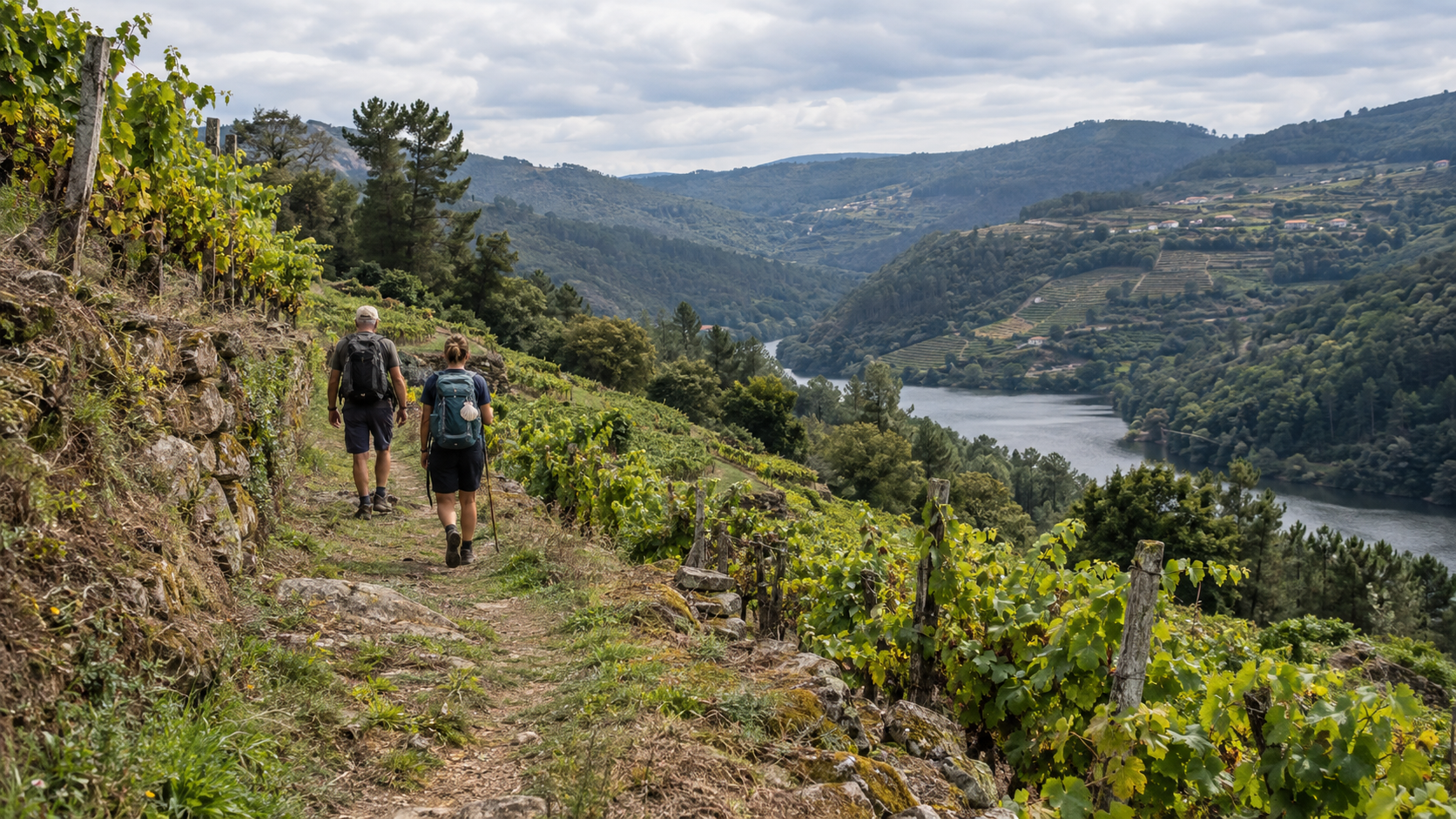
Before you walk the Camino de Santiago, there’s a lot of counting. Miles per day. Pounds in your backpack. How early you’ll need to get up. Then you reach Galicia, in northwestern Spain, and a few other questions start to matter. What’s in that empanada? Why are the grapevines growing overhead? What was the wine we had with dinner?
It can start with a single glass. You like it, so you ask where it’s from. Someone names a place you barely noticed while planning your trip. You look it up. It’s close enough that you start wondering whether you could make time for it tomorrow.
That’s where wine tourism in Galicia fits so naturally into the Camino. A winery visit, a walk through the vines, or an afternoon talking to someone who grows grapes can tell you a great deal about the country you’ve been crossing on foot.
Wine Has a Long History on the Road to Santiago
Galicia’s wine history runs through its monasteries, market towns, and old trade routes. In Ribeiro, monks at the monastery of San Clodio helped develop grape growing during the Middle Ages, building on a tradition that was already there.
One detail makes that history feel surprisingly close: a document listing food prices in Santiago de Compostela in 1133 included wine from Ribeiro. It’s hard to picture the city as it was then, but that small piece of daily life is easy enough to imagine. People arriving, goods changing hands, someone deciding what to charge for the wine.
The connection between Galician wine and the Camino goes back to those exchanges between the countryside and the city pilgrims were walking toward. Visit a vineyard today, and you begin to put a landscape to the story.
The Portuguese Camino: Making Time for Albariño
If you’re walking the Camino Portugués, or Portuguese Way, take a closer look at the Rías Baixas wine region when you plan your trip. This is especially relevant if you’re considering the Spiritual Variant, which branches off near Pontevedra toward Poio, Combarro, and the monastery of Armenteira, then continues through O Salnés to Vilanova de Arousa.
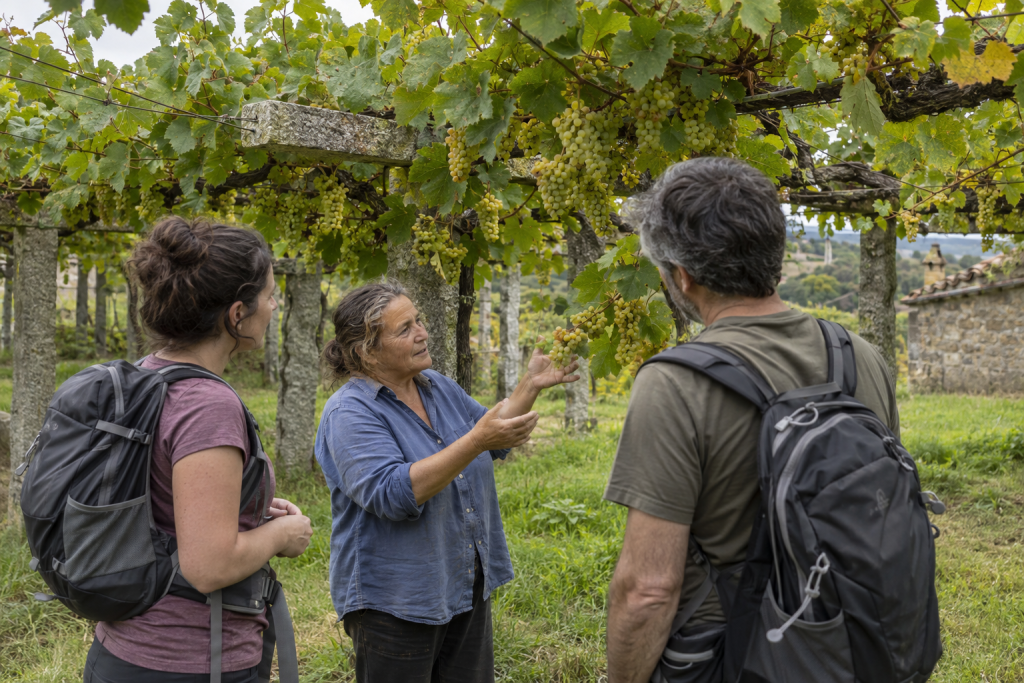
O Salnés is closely associated with Albariño, the white grape that has introduced many American wine drinkers to Galicia. Here, vineyards share the countryside with homes, vegetable gardens, and villages. In many plots, the vines grow on overhead trellises supported by granite posts. Before you’ve tasted a thing, you already have a question for your winery host: why grow them that way?
A visit to a local bodega, or winery, can fit into a free afternoon or an extra day. Book ahead and check the actual distance from your route. A winery in the same region won’t necessarily be beside the yellow arrows that mark the Camino. Nearby Cambados is another reason to linger, though visiting it means making a separate side trip from the usual Spiritual Variant itinerary.
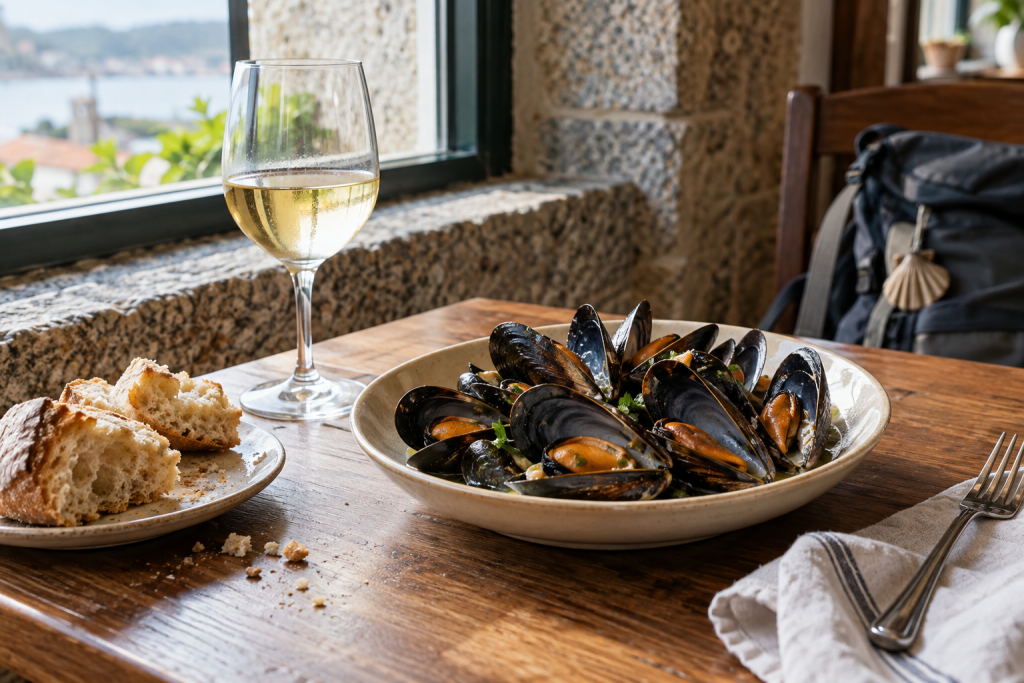
Later, over dinner, try an Albariño with fish or a plate of mussels. You might recognize something your host mentioned during the tasting. Or you might just enjoy it. You don’t need to come away sounding like a sommelier.
The Winter Way: Walking Through Galicia’s Wine Country
On the Camino de Invierno, or Winter Way, the connection is right under your feet. The route enters Galicia through Valdeorras, then passes through parts of Ribeira Sacra before continuing toward Santiago.
That gives you a chance to get to know two wine regions on the same walk. In Valdeorras, there’s Godello, a white grape well worth getting acquainted with. Farther along, in Ribeira Sacra, vineyards on steep slopes draw your attention to something else: how much work it takes to grow grapes here.
Between Monforte de Lemos and Chantada, the Camino passes through Diomondi and descends toward Belesar, taking you into the vineyard landscape along the Miño River. If your legs are complaining on the hillside, spare a thought for the people who work these plots.
A winery visit gives you time to ask about that work and taste local wines, including reds made with Mencía. How do they bring in the harvest? Who looks after the vines? What was different about this year’s weather? Simple questions often lead to the most interesting conversations.
Ribeiro: For When You’re Not Quite Ready to Go Home
You can also save your winery visits until after you reach Santiago. That makes sense if your walking schedule is tight, or if you’d rather keep your afternoons free of appointments.
With transportation and visits arranged, Ribeiro makes a rewarding extension to the trip. The town of Ribadavia, the area around San Clodio, and the vineyards of the Avia Valley bring you closer to the wine country that once supplied medieval Compostela.
Start with a white wine made with Treixadura, one of Ribeiro’s signature grapes, and ask which other varieties went into the blend. Leave time to wander around Ribadavia or settle in for a long lunch. By this point in the trip, sitting down without calculating tomorrow’s mileage has its own appeal.
Leave Room for One Good Visit
If I were fitting wine into a Camino itinerary, I’d start with one carefully chosen visit. A winery within easy reach of your accommodation, an unhurried afternoon, and somewhere to eat afterward.
When you book, ask whether the visit includes the vineyard, how long it lasts, and whether it’s available in English. Plan a tasting for after the day’s walk, with a way back that doesn’t involve driving. During harvest, get in touch well ahead of time. It’s a busy season, and each winery handles visitors differently.
And take a picture of the label if you find a wine you love. Once you’re home, that photo will be a lot more useful than trying to track down “the white we had on the second night.”
Open the bottle months later, and you may remember the place where you first tried it. The dinner. Someone you met along the way. The afternoon you decided to leave open. Those memories deserve a place alongside the miles you walked.
At Galician Wines, we explore Galicia through its wines, its places, and the people who make them. If the Camino has left you curious, keep exploring the grapes and wine regions you encountered along the way with us.